

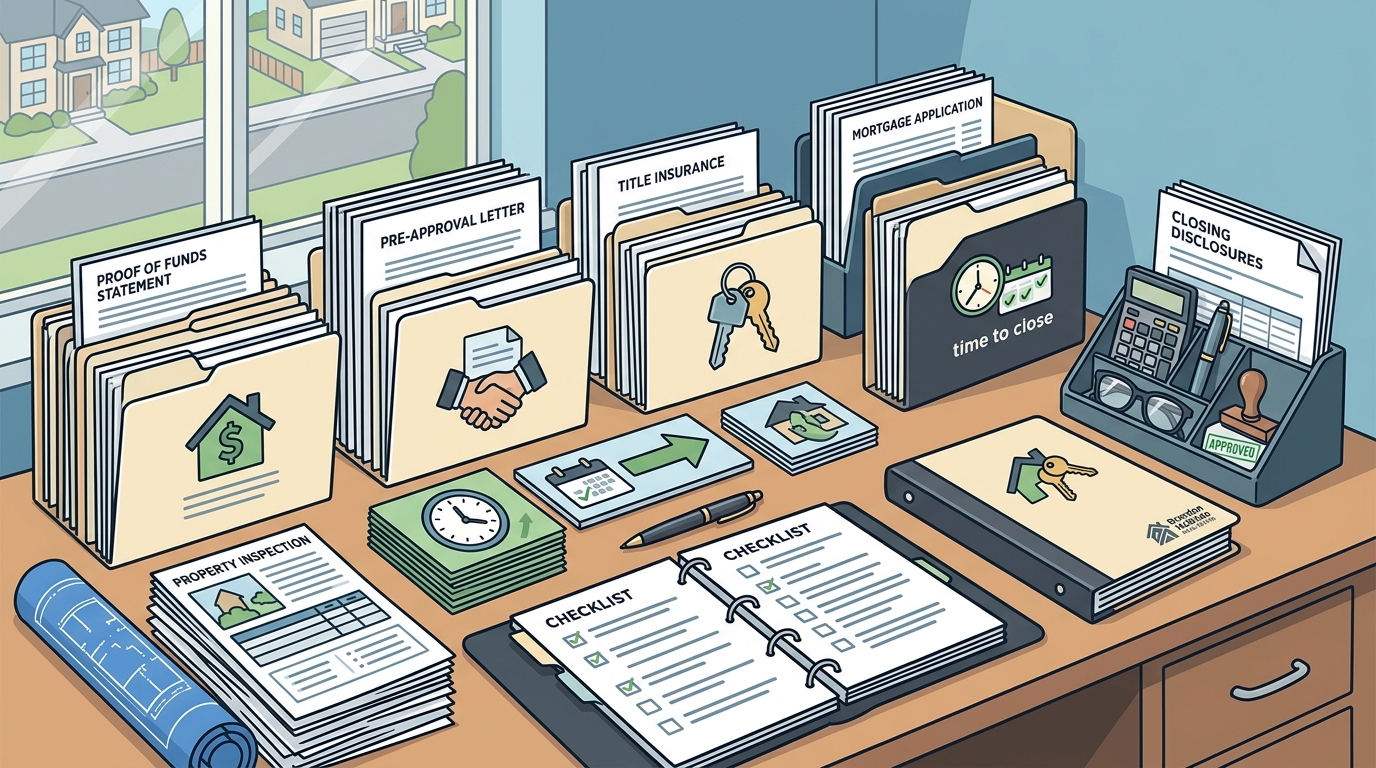
Buying a home is one of the most significant financial transactions you will ever manage, and the paperwork involved can feel overwhelming. According to the National Association of Realtors, the average time to close on a home has increased in recent years, largely due to rigorous verification processes. Understanding exactly what documents are needed during a home purchase transaction is the first step toward a smooth closing. This guide breaks down every critical file you must prepare, from initial proof of funds to final closing disclosures, ensuring you are never caught off guard by last-minute requests.
Proof of Funds and Financial Pre-Approval
Before you even make an offer, your lender will require a robust financial foundation. The first document you need is a pre-approval letter. This letter confirms that a lender has reviewed your credit, income, and debt-to-income ratio and is willing to lend you a specific amount. Unlike a pre-qualification, which is a rough estimate, pre-approval carries weight with sellers.
Alongside the pre-approval letter, you must provide proof of funds. This documentation verifies that you have the cash necessary for your down payment and closing costs. Lenders typically require bank statements for the last two to three months. These statements must show a consistent source of funds. If you are receiving a gift for your down payment, you will also need a gift letter from the donor, stating that the money is a gift and not a loan.
For buyers working with a specialized agent like Brandon McBride, access to a curated contractor network and exclusive "Coming Soon" properties can streamline this phase. You can explore these benefits by visiting the Buy With Brandon page to understand how his VIP Buyer Program supports your financial readiness.
The Purchase Agreement and Addenda
Once your offer is accepted, the purchase agreement becomes the central document of the transaction. This legal contract outlines the price, contingencies, and closing date. It is not a one-page document; it is often accompanied by several addenda that modify or clarify specific terms.
Key addenda include the inspection contingency, which allows you to back out if significant defects are found, and the appraisal contingency, which protects you if the home appraises for less than the offer price. In Utah, where Brandon McBride operates, specific state disclosures are mandatory. These include the Utah Residential Property Condition Disclosure, which the seller must complete regarding the home's condition.
Understanding the nuances of these documents is critical. A misstep here can derail the entire deal. For a deeper look at the local market dynamics in Salt Lake, Davis, and Tooele counties, review the active listings to see how pricing and terms vary by region.
Property Disclosures and Inspections
After the contract is signed, the due diligence period begins. This phase relies heavily on third-party reports. The most critical document here is the home inspection report. This detailed analysis covers the roof, foundation, electrical, plumbing, and HVAC systems. If issues arise, you may negotiate repairs or credits, requiring a formal repair addendum.
Depending on the property's location and age, you may also need specialized reports. These include radon test results, termite or pest inspections, and septic system evaluations. In some cases, a roof certification may be required by the lender. These documents protect you from hidden liabilities that are not visible during a casual walkthrough.
Brandon McBride emphasizes transparency and integrity in every transaction. His approach ensures that you are fully informed about the property's history and condition. You can read more about his philosophy on the About Brandon page, where he details his commitment to treating every client like family.
Title and Escrow Documentation
The title company plays a pivotal role in verifying ownership. You will receive a title search report, which confirms that the seller has the legal right to sell the property and that there are no liens or encumbrances. If liens exist, they must be cleared before closing.
You will also need to secure title insurance. This policy protects you against future claims against the home's ownership. The average cost for title insurance is between $2,000 and $4,000, according to industry data. This is a one-time fee paid at closing. Additionally, you will sign the deed, which legally transfers ownership from the seller to you.
For a comprehensive breakdown of the costs involved in selling, which often mirrors the financial scrutiny buyers face, see the Expenses When Selling guide. While focused on sellers, it provides valuable insight into the financial mechanics of real estate transactions.
Final Closing Documents
In the final days before closing, you will receive the Closing Disclosure (CD). This five-page form details the final loan terms, monthly payments, and all closing costs. You must compare this document to your initial Loan Estimate to ensure accuracy. Any significant changes must be resolved before you sign.
On closing day, you will sign a stack of documents, including the promissory note, which is your legal promise to repay the loan, and the deed of trust or mortgage, which secures the note with the property. You will also sign the affidavit of title, swearing that you are the true owner and that no undisclosed issues exist.
Once all documents are signed and funds are wired, the deed is recorded with the county. You then receive the keys to your new home. For those interested in the financial tools that support this process, the Mortgage Calculator on Brandon McBride's site can help you estimate monthly payments based on current rates.
Key Takeaways
- Pre-Approval is Essential: A pre-approval letter strengthens your offer and clarifies your budget before you start house hunting.
- Proof of Funds Required: Lenders require bank statements for the last two to three months to verify your down payment source.
- Gift Letters Matter: If using gifted funds, a formal gift letter from the donor is mandatory to prove it is not a loan.
- Inspection Contingencies Protect You: Always include an inspection contingency to allow for professional home inspections and potential repairs.
- Title Insurance is Critical: Secure title insurance to protect against ownership disputes and hidden liens on the property.
- Review the Closing Disclosure: Compare the Closing Disclosure to your initial Loan Estimate to catch any unexpected cost changes.
- Local Expertise Helps: Working with an agent who understands Utah-specific disclosures, such as those in Salt Lake and Davis counties, streamlines the process.
Frequently Asked Questions
How long does the document review process take?
The document review process typically takes 30 to 45 days from the time an offer is accepted. This includes time for lender underwriting, home inspections, and title searches. Delays often occur if additional documentation is requested by the lender.
What is a gift letter and do I need one?
A gift letter is a document from a donor stating that the money provided for your down payment is a gift and not a loan. You need one if any portion of your down payment comes from a family member or close friend. Lenders require this to ensure you are not taking on additional debt.
Can I buy a home without a 20% down payment?
No, you do not need 20% down to buy a home. Many loan options, including FHA and VA loans, allow for lower down payments. Brandon McBride works closely with trusted lenders who specialize in these programs to help buyers navigate these options. Learn more about the Buy With Brandon program for details on loan flexibility.
What happens if the home appraisal comes in low?
If the home appraises for less than the offer price, you have several options. You can negotiate with the seller to lower the price, make up the difference in cash, or walk away if you have an appraisal contingency. This is a common scenario in shifting markets.
Who pays for the title insurance?
In many transactions, the seller pays for the owner's title insurance policy, while the buyer pays for the lender's policy. However, this is negotiable. According to industry standards, title insurance costs are a significant part of closing costs, often ranging from $2,000 to $4,000 for the owner's policy.
What is the "Love It or Leave It" guarantee?
Brandon McBride offers a "Love It or Leave It" program for his VIP buyers. If you do not love your home within the first 24 months, he will sell it for free and help you find a new one. This unique guarantee provides peace of mind during the home buying process. See the VIP Buyer Program page for full terms.
How do I prepare for the final walkthrough?
Before closing, you should schedule a final walkthrough to ensure the property is in the agreed-upon condition. Check that all requested repairs have been completed and that the home is clean and free of debris. This is your last chance to identify any issues before signing the final documents.
Ready to Start Your Home Buying Journey?
Navigating the complex web of documents required during a home purchase transaction requires experience, precision, and a trusted partner. Brandon McBride brings over a decade of experience and more than 400 successful home sales to guide you through every step. From securing your pre-approval to managing the final closing documents, his team ensures a stress-free experience.
Don't navigate this process alone. Contact Brandon McBride today to schedule a consultation and discover how his VIP Buyer Program can protect your investment. Visit mcbridebrandon.com to begin your journey to homeownership with confidence.