
Comparing Mortgage Lenders and Loan Options in the Home Buying Process
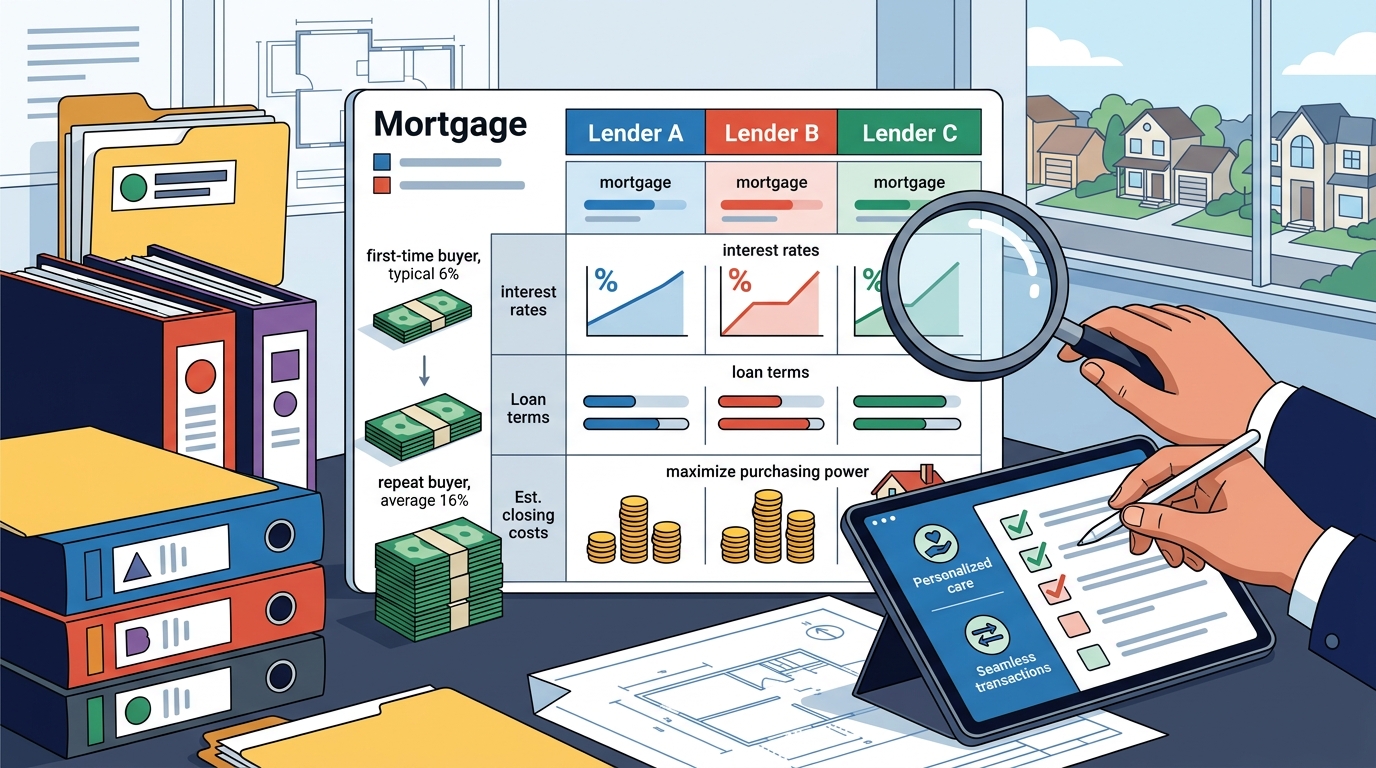
Securing the right financing is the single most critical step in purchasing a property. According to the National Association of Realtors, the typical down payment for first-time buyers is only 6% of the home price, while repeat buyers averaged 16%. This data shows that understanding your loan options is essential for maximizing purchasing power and minimizing long-term costs. Many prospective homeowners overlook the nuances between lender types, leading to higher interest rates or unfavorable terms. This guide breaks down the differences between banks, credit unions, and online lenders, while clarifying the best loan products for your specific financial situation. (Virtual Home Selling Program)
Understanding Lender Types
Not all mortgage lenders operate the same way. Your choice of lender can significantly impact your interest rate, customer service experience, and closing timeline. Here is a breakdown of the three primary categories of mortgage providers.
Traditional Banks
Large national banks offer convenience and brand recognition. They often provide bundled services, such as checking accounts and investment management, alongside your mortgage. However, their overhead costs can sometimes result in slightly higher interest rates compared to smaller institutions. Banks are ideal for buyers who prefer face-to-face interactions and want a one-stop shop for their financial needs.
Credit Unions
Credit unions are member-owned non-profit organizations. Because they do not answer to shareholders, they often offer lower interest rates and reduced fees to their members. Membership requirements usually include living, working, or worshipping in a specific geographic area. For buyers in the Salt Lake Valley, local credit unions can provide highly competitive rates and personalized service.
Online Lenders
Online lenders have revolutionized the mortgage industry by streamlining the application and approval process. They often have lower overhead costs, which can translate to better rates for borrowers. The entire process, from document submission to closing, can be completed digitally. This option is perfect for tech-savvy buyers who value speed and efficiency over traditional branch visits.
Loan Product Breakdown
Choosing the right loan product depends on your credit score, down payment capability, and long-term plans. Conventional loans are loans not insured by the federal government. They typically require a higher credit score and a down payment of at least 3% to 5%. However, they offer the most flexibility and often the lowest rates for borrowers with strong credit.
Federal Housing Administration (FHA) Loans
FHA loans are government-backed mortgages designed to help buyers with lower credit scores or smaller down payments. A key feature is that they require a minimum down payment of just 3.5% for those with a credit score of 580 or higher. These loans are more forgiving of past financial issues, such as bankruptcy or foreclosure, making them a popular choice for first-time buyers.
United States Department of Agriculture (USDA) Loans
USDA loans are available for eligible rural and suburban homebuyers. One of the most attractive features is the zero-down-payment option. These loans are guaranteed by the federal government, which allows lenders to offer favorable terms. If you are looking to buy in the surrounding counties of Salt Lake, Davis, or Tooele, you may qualify for these benefits.
United States Department of Veterans (VA) Loans
VA loans are exclusively for eligible veterans, active-duty service members, and surviving spouses. They offer no down payment and no private mortgage insurance (PMI) requirements. This can save buyers thousands of dollars in upfront costs and monthly payments. The process is streamlined, and VA loans are widely accepted by lenders in Utah.
Comparing Costs and Fees
Beyond the interest rate, you must evaluate the total cost of the loan. Lenders provide a Loan Estimate within three days of your application. This document details the interest rate, monthly payment, and closing costs. It is crucial to compare the "Closing Cost Worksheet" across multiple lenders.
| Cost Category | Typical Range | Who Pays? | Negotiable? |
|---|---|---|---|
| Origination Fee | 0.5% to 1% of loan amount | Borrower | Yes |
| Appraisal Fee | $300 to $600 | Borrower | No |
| Title Insurance | $2,000 to $4,000 | Seller or Buyer | Partially |
| Recording Fees | $50 to $250 | Borrower | No |
When you work with a dedicated agent, you gain access to a curated network of trusted lenders. This network ensures that you are working with professionals who understand the local market and can close deals efficiently. For more insights on the financial aspects of selling, review the expenses when selling to understand the full spectrum of real estate costs.
VA and FHA Options
For veterans and first-time buyers, VA and FHA loans offer distinct advantages. VA loans are particularly powerful because they eliminate the need for private mortgage insurance, which is typically required for conventional loans with less than 20% down. This can result in significant monthly savings.
FHA loans are also excellent for those with less-than-perfect credit. However, they require mortgage insurance premiums (MIP) for the life of the loan in most cases. This means you cannot remove the insurance even after reaching 20% equity. Understanding these long-term implications is vital for financial planning.
If you are a veteran or eligible service member, it is important to choose an agent who understands the VA loan process. I have extensive experience working with VA loans and can guide you through the specific documentation and appraisal requirements. For a deeper dive into the buying process, explore the VIP Buyer Program to see how I support buyers through every step.
Key Takeaways
- Down Payment Myths: You do not need 20% down to buy a home. Many loan options require as little as 3% to 5%.
- Lender Variety: Banks, credit unions, and online lenders each offer unique benefits. Compare rates from at least three sources.
- VA Loan Benefits: Veterans can secure zero-down loans with no PMI, offering substantial long-term savings.
- FHA Flexibility: FHA loans allow for lower credit scores and smaller down payments, making homeownership accessible to more buyers.
- Agent Network: Working with an experienced agent provides access to trusted lenders who can streamline the approval process.
- Cost Transparency: Always review the Loan Estimate carefully to compare origination fees and closing costs across lenders.
- Local Expertise: Understanding local market trends in Salt Lake, Utah, Davis, and Tooele counties helps in timing your purchase.
Frequently Asked Questions
Do I need to put 20% down for a loan?
No, this is a common myth. There are plenty of loan options available, including conventional loans that require as little as 3% down and FHA loans requiring 3.5% down. Putting more down can reduce your monthly payment and eliminate private mortgage insurance, but it is not a strict requirement for most buyers.
Do you work with VA and FHA loans and buyers?
I absolutely do. I have plenty of experience working with VA loans and work closely with trusted lenders who specialize in them. VA loans have unique requirements, so having an agent who knows how to navigate the process is crucial. I also assist buyers with FHA loans, ensuring they understand the insurance implications.
How do I choose the best mortgage lender?
Compare at least three lenders. Look at both the interest rate and the closing costs. A lower rate might come with higher fees, so calculate the total cost. Also, consider the lender's communication style and responsiveness, as you will be in contact with them for several weeks.
What is the difference between a fixed-rate and adjustable-rate mortgage?
A fixed-rate mortgage has an interest rate that stays the same for the entire loan term, providing predictable monthly payments. An adjustable-rate mortgage (ARM) has a rate that changes after an initial fixed period. ARMs often start with lower rates but can increase later, which adds risk to your budget.
How long does the mortgage approval process take?
The pre-approval process can take a few days to a week. The full underwriting and closing process typically takes 30 to 45 days. Delays can occur due to appraisal issues, title problems, or changes in your financial status. Working with an experienced agent can help mitigate these delays.
Can I negotiate my lender's fees?
Yes, many fees are negotiable. Origination fees, underwriting fees, and administrative charges can often be reduced or waived. You can also shop around for lower rates on services like title insurance and home inspection. Always ask your lender to explain each fee on your Loan Estimate.
Start Your Home Buying Journey Today
Choosing the right mortgage lender and loan option is a pivotal decision that impacts your financial future for decades. Do not navigate this complex process alone. With over a decade of experience and more than 400 homes successfully sold, I provide the expertise and guidance you need to secure the best financing. My VIP Buyer Program ensures you have access to exclusive properties and trusted lender networks. Contact me today to discuss your goals and find a home you will truly love.