
Common Home Buying Mistakes and How to Avoid Them at Every Stage
Buying a home is the largest financial transaction most people will ever undertake, yet nearly half of first-time buyers admit to making significant errors during the process. According to recent industry data, approximately 40% of homebuyers encounter unexpected costs or delays that could have been mitigated with better preparation. This guide outlines the critical pitfalls at every stage of the journey and provides actionable strategies to protect your investment, drawing on over a decade of experience helping families in Salt Lake, Utah, Davis, and Tooele counties navigate the market successfully. (Virtual Home Selling Program)
Stage 1: Financial Preparation and Mortgage Myths
The foundation of a successful home purchase is built long before you view a single property. The most common mistake buyers make is underestimating the true cost of homeownership or relying on outdated financing myths. Many individuals believe they must save a full 20% down payment to qualify for a mortgage. This is a pervasive misconception that prevents capable buyers from entering the market. In reality, numerous loan programs, including FHA and VA loans, allow for significantly lower down payments, sometimes as low as zero percent for eligible veterans.
Underestimating Closing Costs
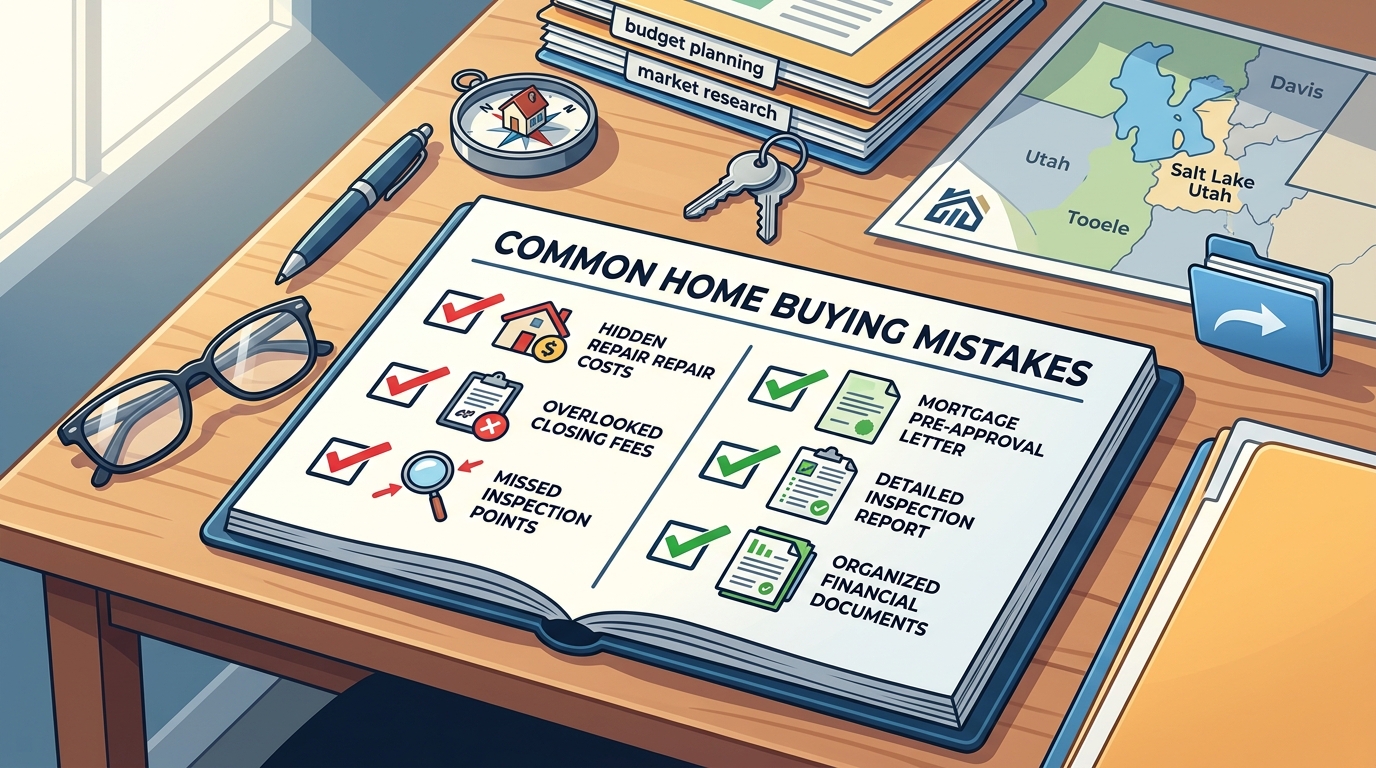
Another critical error is failing to budget for closing costs, which typically range from 2% to 5% of the loan amount. These fees include title insurance, appraisal fees, and attorney costs. For a $400,000 home, this could mean an unexpected outlay of $8,000 to $20,000. Buyers often focus solely on the down payment and forget to reserve funds for these final expenses. To avoid this, request a Loan Estimate from your lender early in the process to understand the exact financial commitment.
Ignoring Credit Health
Your credit score directly influences your interest rate, which can save or cost you tens of thousands of dollars over the life of the loan. A drop in credit score due to new debt, such as buying a car or furniture, just before closing can derail your approval. Financial discipline during the pre-approval phase is non-negotiable. Avoid opening new credit lines or making large purchases until after you have moved into your new home.
Stage 2: The Property Search and Selection Errors
Once financing is secured, the search begins. This stage is fraught with emotional and strategic errors that can lead to buyer's remorse or missed opportunities. The primary mistake here is allowing emotion to override due diligence. Buyers often fall in love with the decor or the view, ignoring the structural integrity or the neighborhood's long-term value.
Skipping the Neighborhood Analysis
A home is only as good as its location. Many buyers focus exclusively on the interior features and neglect to research the neighborhood. Factors such as school district ratings, future development plans, noise levels, and commute times are critical. In areas like Midvale and Salt Lake City, understanding local zoning laws and future infrastructure projects can significantly impact your property's appreciation. Visit the neighborhood at different times of the day and week to gauge traffic and community vibe.
Ignoring the "Love It or Leave It" Risk
Buying a home is a massive commitment. If you do not absolutely love your home, the regret can be costly. To mitigate this risk, some agents offer unique buyer protection programs. For instance, the "Love It or Leave It" guarantee ensures that if you do not love your home within the first 24 months, the agent will sell it for free and help you find a replacement. This level of confidence is rare and provides immense peace of mind for nervous buyers.
Stage 3: Offer Strategy and Negotiation Pitfalls
When you find the right home, the offer stage requires precision. A poorly structured offer can be rejected instantly, even if the price is competitive. The most common mistake is waiving too many contingencies to appear "stronger" to the seller. While waiving inspections or appraisals might seem like a way to win a bidding war, it exposes you to enormous financial risk.
Overbidding in Hot Markets
In competitive markets, buyers often escalate prices beyond the home's appraised value. If the appraisal comes in lower than the offer price, your lender will only finance the appraised amount. You must then cover the gap in cash or renegotiate. This situation can force buyers to bring thousands of dollars in unexpected cash to the closing table. Always include an appraisal contingency to protect yourself from overpaying.
Underestimating Seller Concessions
Smart buyers negotiate for more than just price. Requesting seller concessions for closing costs or repairs can effectively reduce your out-of-pocket expenses. However, sellers may counter by raising the price if they perceive you are trying to get "free money." A balanced approach involves negotiating a fair price while asking for reasonable concessions based on market conditions.
Stage 4: Inspection and Contingency Oversights
The inspection phase is your last chance to back out of the deal without penalty if major issues are discovered. The mistake here is either skipping the inspection entirely or accepting the seller's repair credits without verifying the scope of work.
Skipping Specialized Inspections
A general home inspection covers the basics, but older homes or those in specific regions may require specialized checks. In Utah, for example, soil stability and water rights can be critical factors. If the home has a well or septic system, these must be inspected separately. Failing to identify these issues can lead to repair bills exceeding $10,000. Always budget for specialized inspections based on the property's age and location.
Waiving the Appraisal Contingency
As mentioned, waiving the appraisal contingency is dangerous. If the home does not appraise for the sale price, the deal can fall through, and you may lose your earnest money deposit if not structured correctly. Protect your earnest money by keeping the appraisal contingency in place. This ensures you are not forced to cover the difference between the sale price and the appraised value.
Stage 5: Closing Day and Final Documentation
Closing day is the culmination of the process, but it is also where final errors can occur. The most common mistake is not reviewing the Closing Disclosure (CD) document carefully. The CD outlines the final terms of your loan and the exact costs you will pay. Comparing this to your initial Loan Estimate is crucial to ensure no hidden fees have appeared.
Failure to Verify Funds
Ensure that your funds are wired correctly and have cleared before closing day. Wire fraud is a real threat in real estate transactions. Always verify wiring instructions by phone with your title company or attorney, never relying solely on email. Additionally, do not make any large financial changes, such as taking out a new loan or opening a new credit card, between the time of approval and closing. Lenders will re-check your credit and employment status just days before closing.
Ignoring Home Warranty Options
Many buyers skip the home warranty, viewing it as an unnecessary expense. However, a home warranty can cover the repair or replacement of major systems and appliances for the first year. This is particularly valuable for older homes where the age of the roof, HVAC, and plumbing is unknown. The cost is typically between $500 and $800, which is minimal compared to the potential cost of a broken water heater or furnace.
Key Takeaways
- Down Payment Myths: You do not need 20% down. VA and FHA loans offer lower barriers to entry for qualified buyers.
- Closing Costs: Budget 2-5% of the purchase price for closing costs to avoid cash shortages at settlement.
- Credit Discipline: Do not open new credit or make large purchases after pre-approval to maintain your loan eligibility.
- Inspection Importance: Never waive the home inspection. It is your primary tool for identifying hidden defects and negotiating repairs.
- Appraisal Protection: Keep the appraisal contingency to avoid covering the gap if the home appraises for less than the offer price.
- Neighborhood Analysis: Research school districts, zoning, and future development to ensure long-term property value.
- Buyer Protection: Consider agents who offer guarantees like "Love It or Leave It" to reduce the risk of buyer's remorse.
Frequently Asked Questions
How much should I save for closing costs?
You should save between 2% and 5% of the home's purchase price for closing costs. This includes title insurance, appraisal fees, and lender charges.
Can I buy a home with less than 20% down?
Yes. Many loan programs, including FHA, VA, and conventional 3% down loans, allow you to purchase a home with significantly less than 20% down.
What is the "Love It or Leave It" guarantee?
This is a buyer protection program where the agent agrees to sell your home for free and help you find a new one if you do not love it within the first 24 months.
Why is a home inspection necessary?
A home inspection identifies hidden structural, mechanical, and safety issues that are not visible during a walkthrough, protecting you from costly future repairs.
What happens if the home appraises for less than the offer price?
If you have an appraisal contingency, you can renegotiate the price, bring the difference in cash, or walk away from the deal and recover your earnest money.
How long does the home buying process take?
The process typically takes 30 to 45 days from offer acceptance to closing, but this can vary based on financing, inspections, and local market conditions.
Should I buy a home warranty?
A home warranty is recommended, especially for older homes. It covers the repair or replacement of major systems and appliances for the first year, providing financial protection.
Start Your Home Buying Journey Today
Avoiding these common mistakes requires experience, local knowledge, and a trusted partner who prioritizes your interests. Brandon McBride offers a VIP Buyer Program designed to make your home buying experience seamless and stress-free. From exclusive "Coming Soon" properties to a contractor network and a "Love It or Leave It" guarantee, Brandon provides the tools and confidence you need to make smart real estate moves. Visit Buy With Brandon to learn more about how we can help you find your perfect home in Salt Lake, Utah, Davis, and Tooele counties. Contact us today at contact to schedule your consultation.