

Buying a home is one of the most significant financial decisions you will ever make, yet the paperwork involved often causes unnecessary stress for first-time buyers. According to the National Association of Realtors, the average time to close on a home can vary significantly based on documentation readiness, with delays often stemming from incomplete financial files. Navigating this landscape requires more than just a good real estate agent; it demands a systematic approach to gathering, verifying, and submitting critical paperwork. This guide outlines the exact documents you need to prepare to ensure a smooth transaction from offer to closing. (Virtual Home Selling Program)
Financial Documentation Requirements
Before you can even submit a competitive offer, your lender will require a robust set of financial documents to prove your ability to repay the loan. This phase is often where transactions stall, making early preparation crucial. Proof of funds is the foundation of your credibility in the eyes of both the seller and the lender. (Brandon McBride Real Estate)
Bank Statements and Asset Verification
Lenders typically require the last two to three months of bank statements for all accounts used to demonstrate your financial health. This includes checking accounts, savings accounts, and money market funds. If you are using retirement accounts like a 401(k) or IRA for a portion of your down payment, you will need to provide statements for those as well. The goal here is to show that you have sufficient liquid assets to cover the down payment and closing costs without jeopardizing your emergency reserves. (blog)
For those utilizing gift funds from family members, a gift letter is a mandatory document. This letter must explicitly state that the money is a gift and not a loan, and it must include the donor's contact information and a statement confirming they have no expectation of repayment. Without this document, the funds may be viewed as a hidden debt, potentially disqualifying your loan application.
Identification and Legal Status
You must provide valid government-issued identification to verify your identity. This usually includes a driver's license or passport. Additionally, if you are a non-permanent resident, you may need to provide an Alien Registration Receipt Card or other immigration documentation. These documents are required for the lender to comply with federal anti-fraud regulations and to verify your legal status to hold property.
Employment and Income Verification
Your income stability is the primary metric lenders use to determine your loan eligibility. The documentation required varies slightly depending on your employment type, but the core principle remains the same: proving consistent and reliable income.
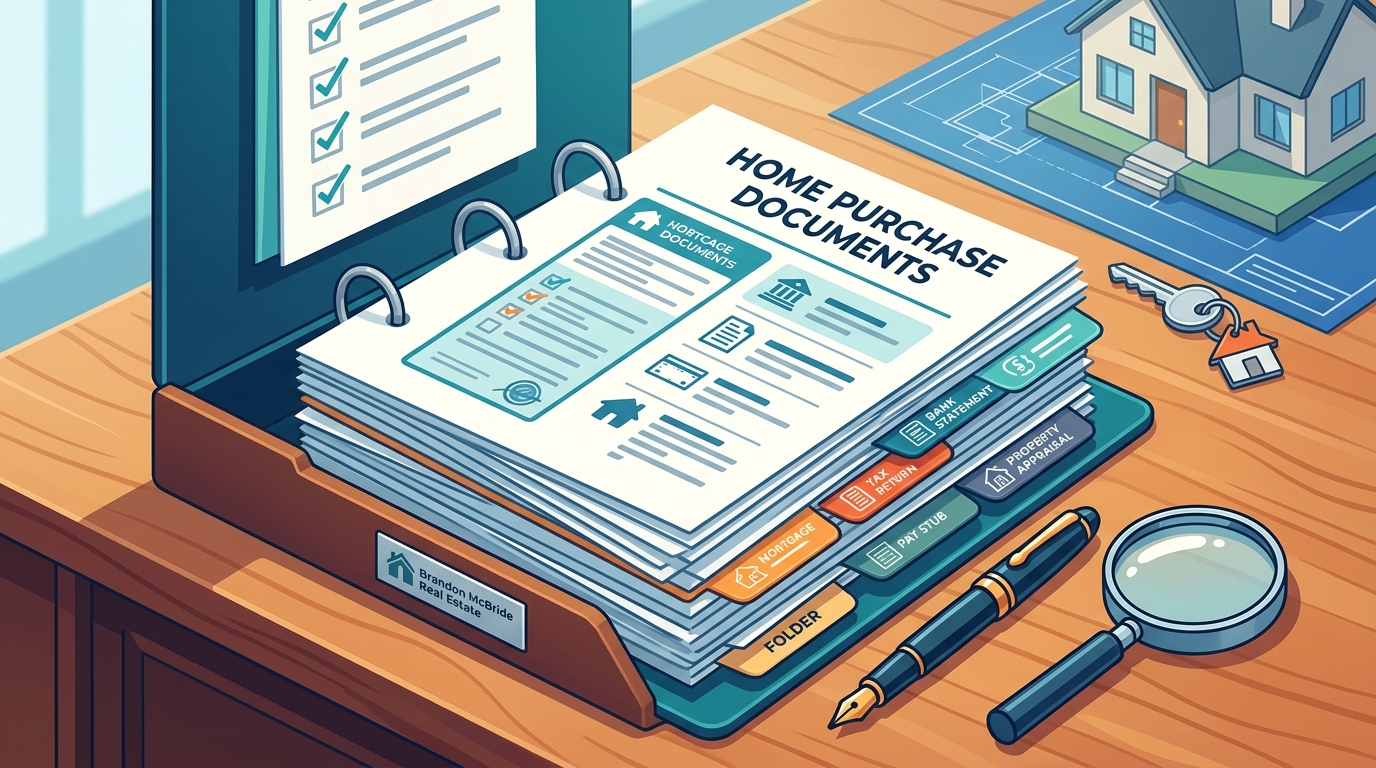
W-2 Employees
If you are a traditional W-2 employee, you will need to provide your most recent pay stubs, typically covering the last 30 days. You will also need to submit your W-2 forms from the previous two tax years. Lenders will look for a consistent work history, usually requiring at least two years in the same field or industry. If you have recently changed jobs, you may need a letter of employment from your new employer confirming your start date and salary.
Self-Employed Individuals
Self-employed buyers face a more rigorous documentation process. You will need to provide personal and business tax returns for the last two years, including all schedules. Additionally, year-to-date profit and loss statements and balance sheets are often required to show current business performance. This is because lenders need to verify that your income is not only consistent but also sustainable. Income verification for self-employed individuals is complex and requires careful review by your loan officer to ensure compliance with underwriting guidelines.
Property-Specific Disclosures and Reports
Once your offer is accepted, the focus shifts to the property itself. These documents protect you from hidden defects and ensure you are fully informed about the home's condition and legal status.
Home Inspection Reports
A professional home inspection is non-negotiable in most transactions. The resulting report details the condition of the roof, foundation, plumbing, electrical systems, and HVAC units. If significant issues are found, you may negotiate repairs or credits. This report is a critical tool for risk management, allowing you to make an informed decision about the property's long-term viability.
Title Search and Survey
A title search is conducted to ensure the seller has the legal right to sell the property and that there are no liens, easements, or ownership disputes. The title insurance policy protects you from future claims against the property. A survey may also be required to confirm property boundaries, ensuring that structures like fences or sheds do not encroach on neighboring lots. These documents are essential for establishing clear ownership and preventing future legal conflicts.
HOA Documents
If the property is part of a Homeowners Association (HOA), you will receive the HOA governing documents, including the bylaws, covenants, conditions, and restrictions (CC&Rs), and the most recent financial statements. These documents outline the rules you must follow, such as landscaping requirements or pet restrictions, and provide insight into the financial health of the association. Understanding these rules is vital to avoid unexpected fees or restrictions after purchase.
Contractual Agreements and Addendums
The purchase agreement is the legal backbone of the transaction. It outlines the terms of the sale, including price, closing date, and contingencies. However, the contract is often supplemented by several addendums that modify or clarify specific aspects of the deal.
Contingencies
Contingencies are conditions that must be met for the sale to proceed. Common contingencies include financing, appraisal, and inspection. If these conditions are not met, you can typically withdraw from the contract without penalty. For example, if the home appraises for less than the purchase price, the financing contingency allows you to renegotiate or walk away. These protections are crucial for safeguarding your interests during the transaction.
Lead-Based Paint Disclosure
For homes built before 1978, federal law requires the seller to provide a lead-based paint disclosure. This document informs you of any known lead-based paint hazards in the property. You also have the opportunity to conduct a lead inspection at your own expense. This is a critical safety measure for families with young children, as lead exposure can have severe health consequences.
The Closing Document Workflow
The final stage of the home buying process involves signing a substantial volume of legal documents. Understanding what you are signing is key to a successful closing.
The Closing Disclosure
At least three business days before closing, you will receive a Closing Disclosure (CD). This five-page form provides final details about your mortgage loan, including your interest rate, monthly payment, and total closing costs. You must review this document carefully to ensure it matches the Loan Estimate provided earlier in the process. Any significant discrepancies must be addressed before you proceed.
Mortgage Note and Deed of Trust
The Promissory Note is your legal IOU to the lender, outlining the repayment terms. The Deed of Trust (or Mortgage) secures the note by placing a lien on the property. These documents are legally binding and establish the lender's interest in the home until the loan is paid in full. Signing these documents transfers the financial responsibility to you and grants the lender the right to foreclose if you default.
Settlement Statement
The HUD-1 or Closing Settlement Statement provides a detailed breakdown of all financial transactions related to the sale. It lists the amount you are paying and the amount the seller is receiving. This document ensures transparency in the financial exchange and allows you to verify that all credits and debits are accurate. It is the final accounting of the transaction before funds are disbursed.
Key Takeaways
- Financial Readiness: Gather bank statements, pay stubs, and tax returns at least two weeks before applying for a mortgage to avoid delays.
- Gift Funds: If using gifted money, secure a signed gift letter from the donor immediately to satisfy lender requirements.
- Inspection Rights: Never waive the home inspection contingency unless you are an experienced investor with specific risk tolerance.
- Title Clarity: Review the title report thoroughly to identify any liens or easements that could affect your ownership rights.
- HOA Rules: Read the HOA documents carefully to understand financial obligations and lifestyle restrictions before buying.
- Closing Disclosure: Review the Closing Disclosure at least three days before closing to catch any errors in costs or terms.
- Professional Guidance: Work with a trusted real estate expert to navigate complex documentation and ensure a smooth transaction.
Frequently Asked Questions
How long does it take to gather all necessary documents for a home purchase?
Typically, it takes two to three weeks to gather all necessary financial and personal documents. Starting early can significantly speed up the pre-approval process and allow you to make stronger offers.
What happens if I cannot provide a gift letter for down payment funds?
If you cannot provide a gift letter, the lender may view the deposited funds as a loan, which will increase your debt-to-income ratio and could disqualify you from the mortgage. Alternative strategies may include using a down payment assistance program or increasing your personal savings.
Can I sign closing documents before the actual closing date?
In some cases, lenders allow you to sign certain documents early, such as the loan estimate acknowledgment. However, the final closing documents, including the Promissory Note and Deed of Trust, must be signed after the Closing Disclosure has been received and the mandatory three-day waiting period has passed.
Do I need to provide tax returns if I am a W-2 employee?
While W-2 employees primarily rely on pay stubs and W-2 forms, lenders may request personal tax returns if there are discrepancies in your income or if you have additional income sources like rental properties or freelance work.
What is the purpose of the lead-based paint disclosure?
The lead-based paint disclosure is a federal requirement for homes built before 1978. It informs buyers of any known lead paint hazards and provides an opportunity to conduct a lead inspection, protecting the health of occupants, especially children.
How do I verify the accuracy of the Closing Disclosure?
Compare the Closing Disclosure line-by-line with the initial Loan Estimate provided by your lender. Look for significant changes in interest rates, monthly payments, and closing costs. Any discrepancies should be discussed with your loan officer immediately.
What is the role of the title company in the document process?
The title company conducts the title search, issues title insurance, and often acts as the closing agent. They ensure that the seller has the legal right to transfer ownership and that the title is clear of any liens or encumbrances before the transaction is finalized.
Next Steps
Navigating the documentation requirements for a home purchase can be daunting, but you do not have to do it alone. With over a decade of experience and more than 400 homes successfully sold, I bring proven results and deep industry knowledge to guide you through every step. My mission is to make the process as smooth, informed, and stress-free as possible. Whether you are buying your first home or upgrading, I treat every client like family. To start your journey with confidence, explore my VIP Buyer Program and discover the exclusive benefits designed to make your real estate experience seamless. For personalized guidance, contact Brandon McBride today.